12 Jan 2026
Student-led Discovery
Having students focus on building the content with prompts.
Context
The students had to learn about the History of Cloud Computing, the original idea for the session was for me to talk through some examples, and then there would be some activities revolving around research but I wanted to do something where students did most of the work; as University is about independant research and learning it suits the format.
What I tried
I created a board on Padlet which contained each relevant time period, students were given an example and asked to produce examples of events with a reference (Harvard style). This served as a basis for their assessment meaning that they crowdsourced their research between the entire class.
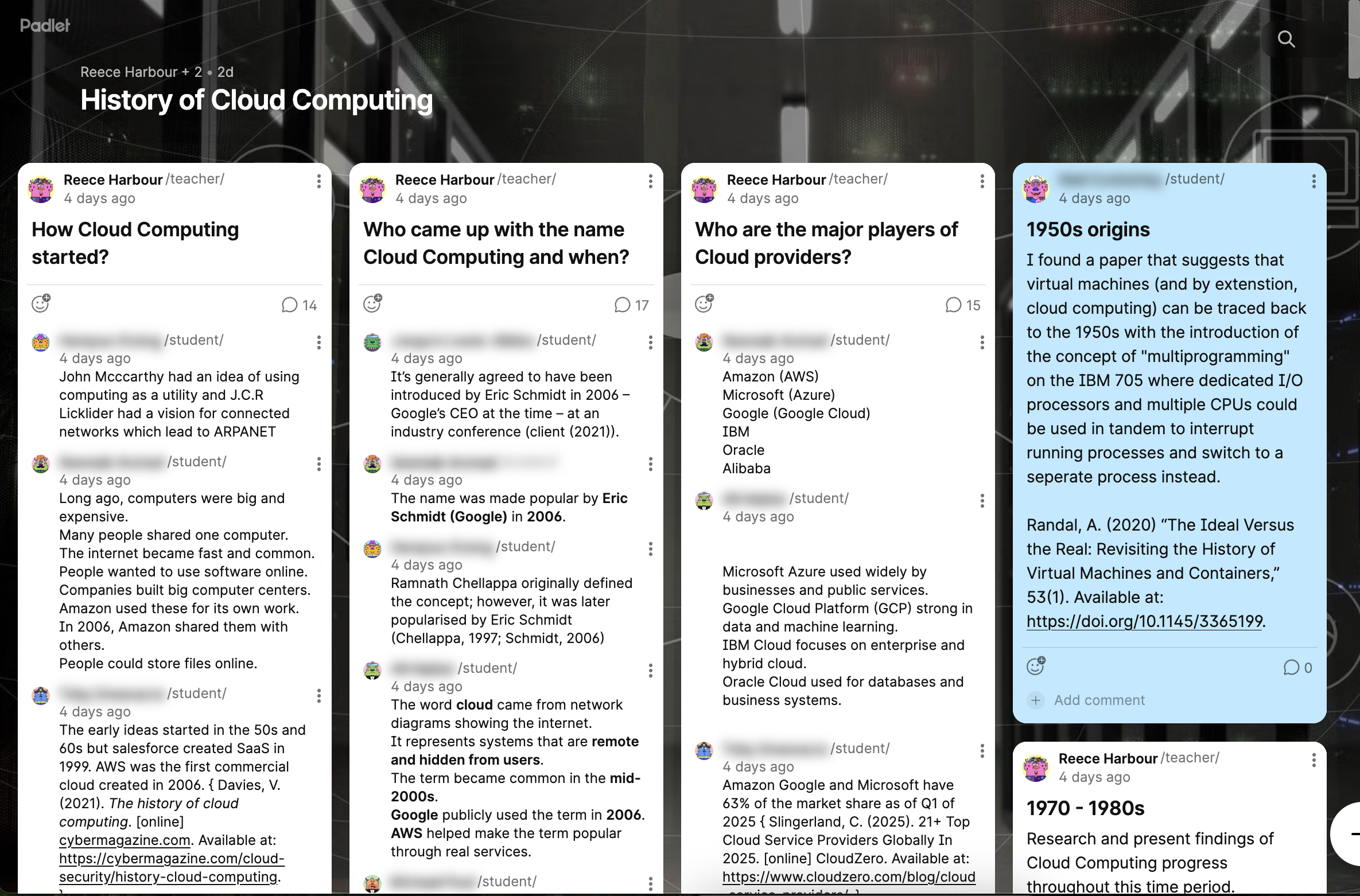
Padlet - History of Cloud Computing
Similarly the same tool has been used for students to recap what they learned in the previous session, the idea here is that students recap what they remember even if they only remember some parts that leads to an whole pie of knowledge. The other benefit to this is that if a student isn’t on-site for some sessions, they can refer back to this.
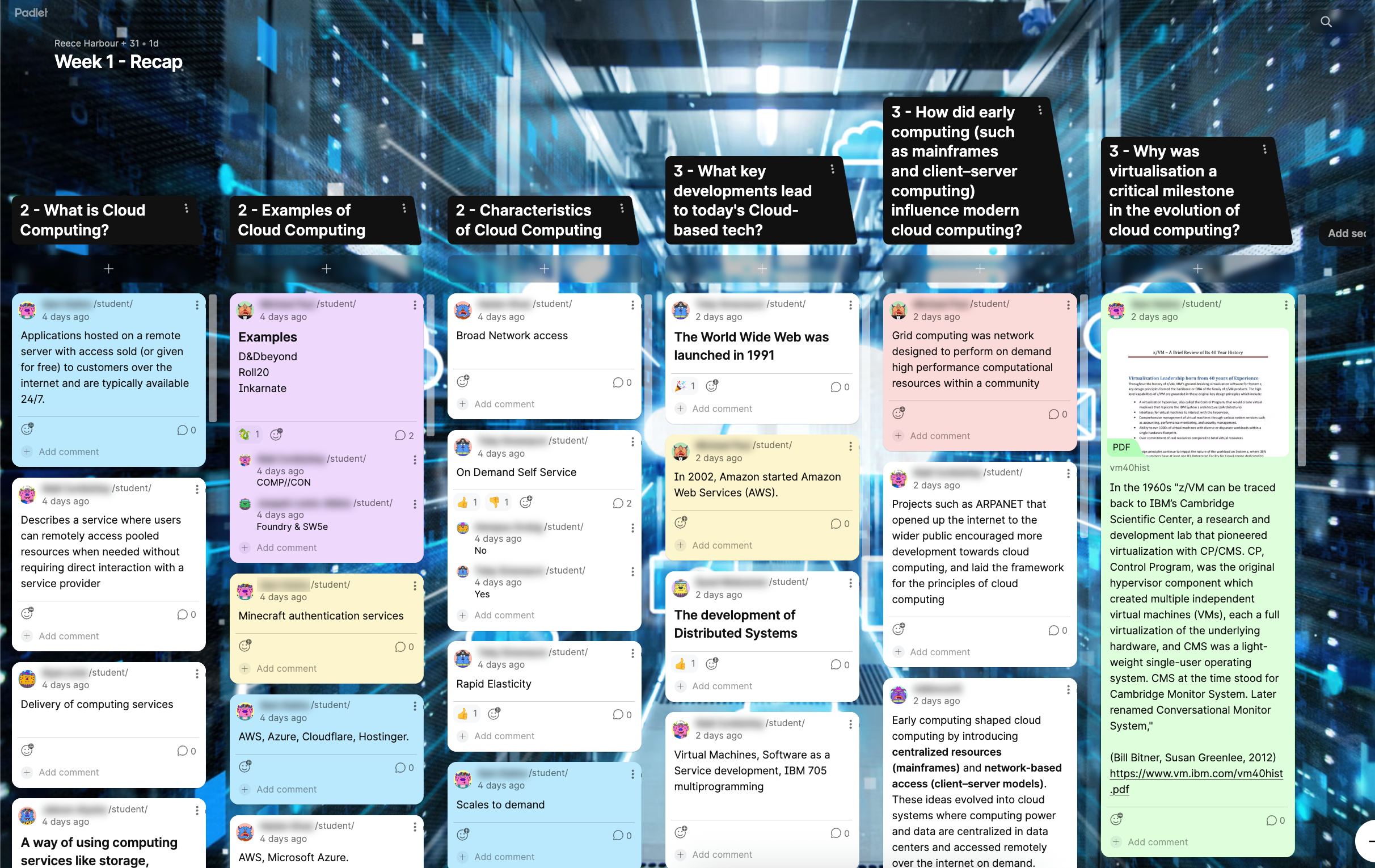
Padlet - Recap of knowledge
Without using the same format, for a tutoring session of GCSE I used Microsoft Whiteboard and drew the diagram of a CPU, and left it mostly blank. The student’s task was to remember what each component/register was responsible for. We did have to try some different iterations of this, for example I had to include my own labels and the student had to tell me what it did, this was mostly successful as a retrieval task.
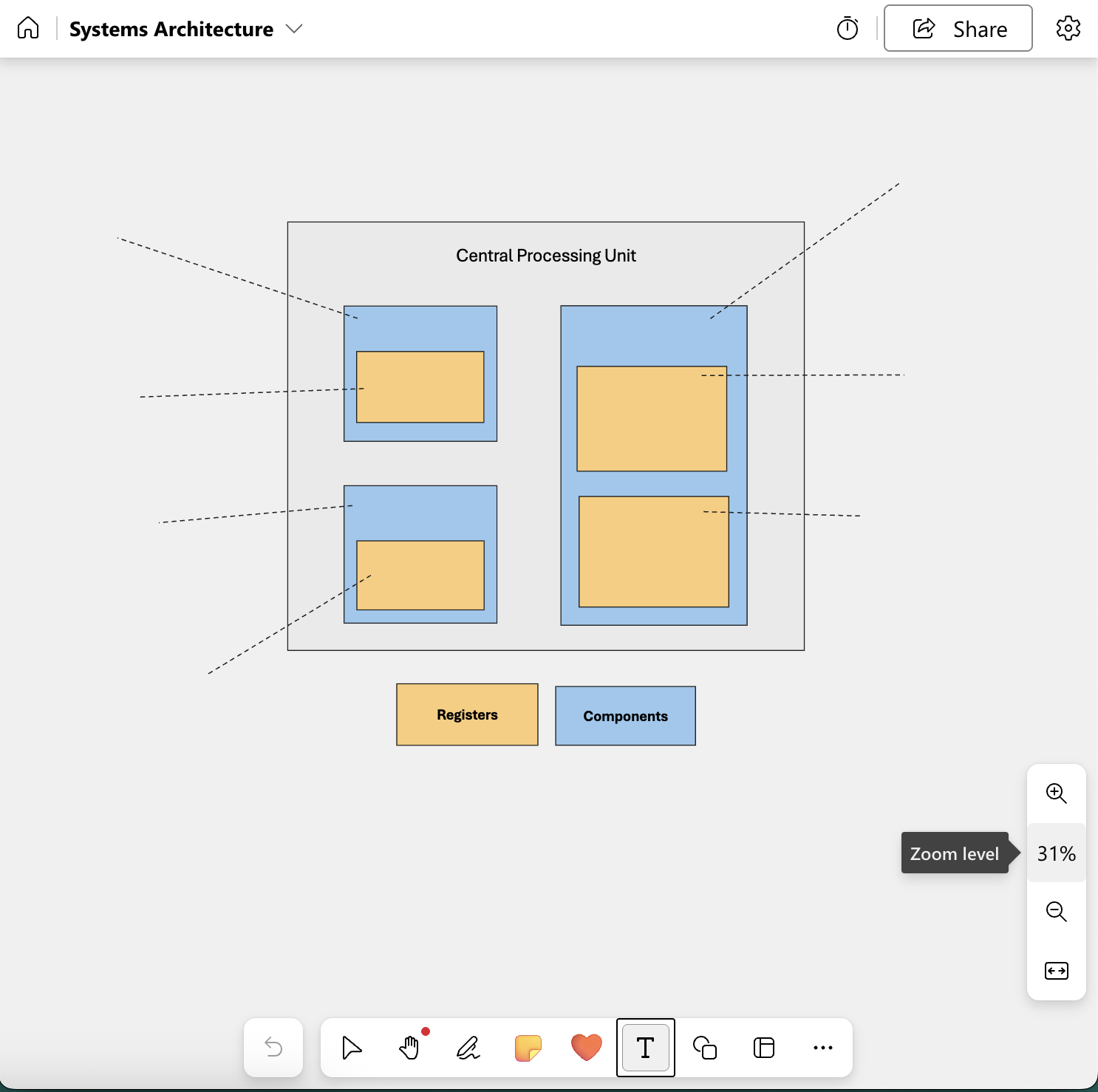
MS Whiteboard - CPU
Reflection
Next time
TL;DR: Student-led experiences are beneficial with the right tools, some guidance and independence.